

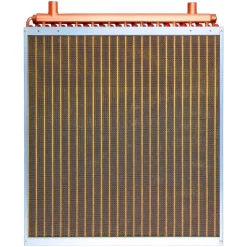

VEVOR Water to Air Heat Exchanger, 24 x 24 in Finned Tube HVAC Heat Exchanger Coil with Copper Tubes & Aluminum Fins, 225K BTU Output for Outdoor Wood Furnace, Hydronic Heating & Cooling Systems
$126.99
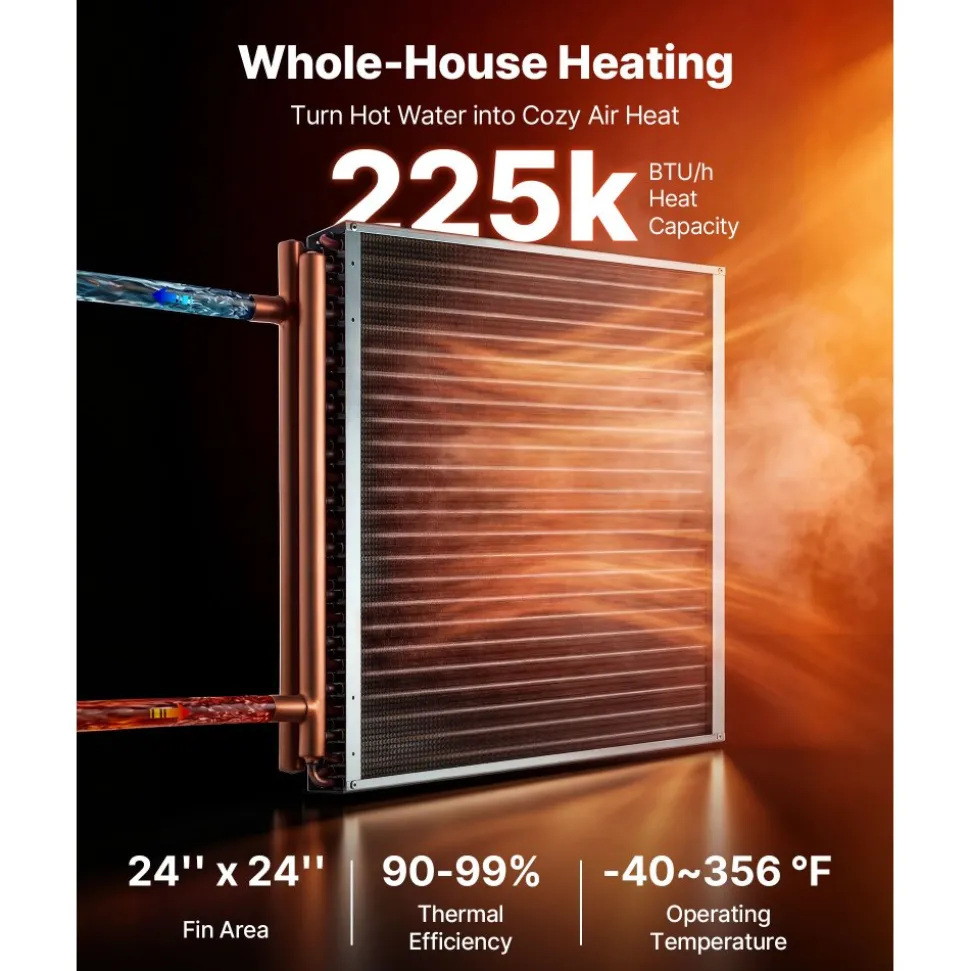
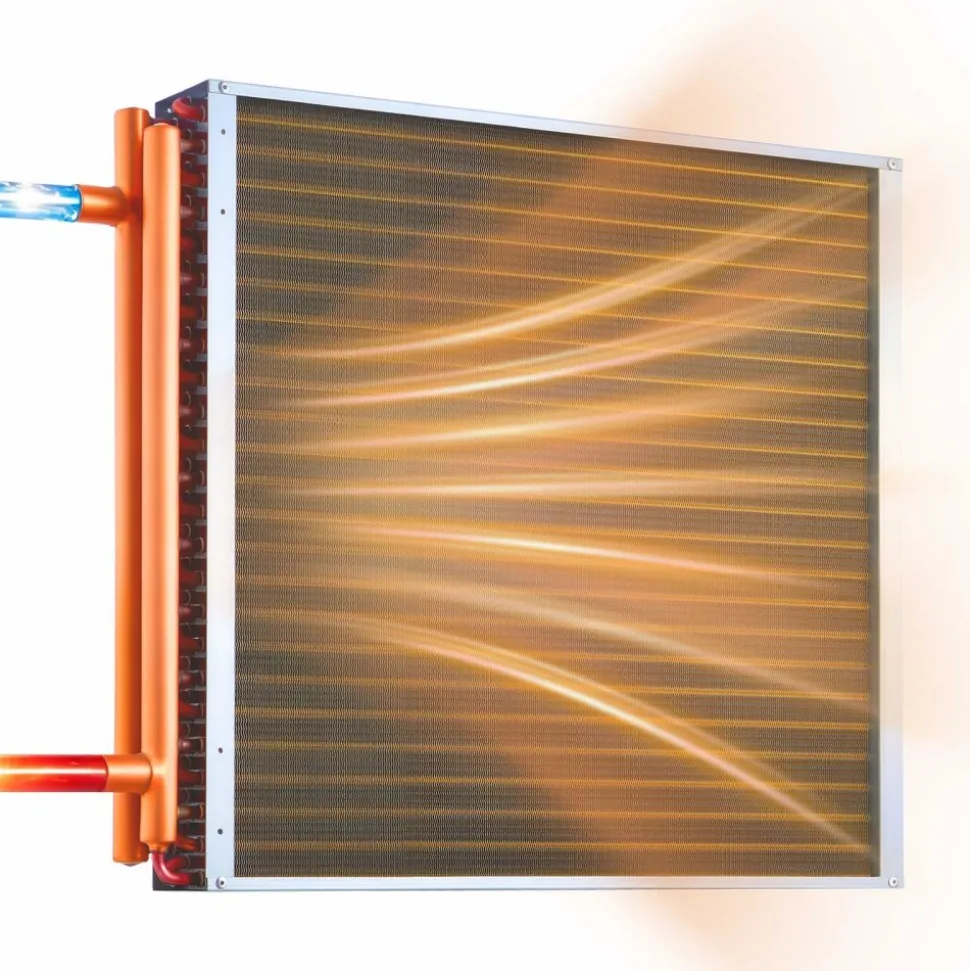
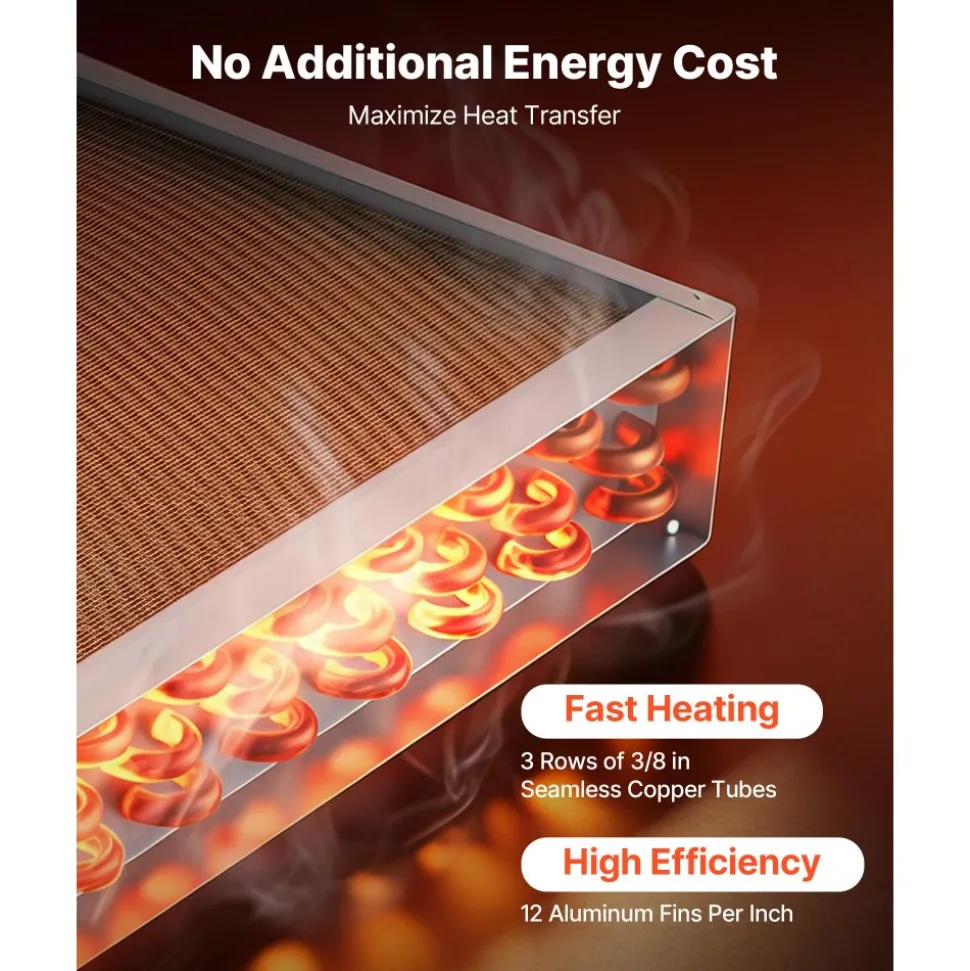
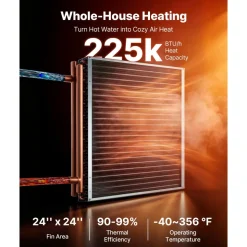
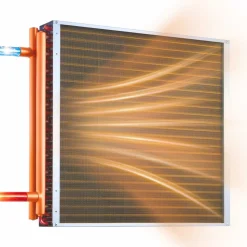
- High Efficiency: this heat exchanger is constructed with copper tubes and aluminum fins to maximize thermal conductivity, delivering efficient heat transfer efficiency and a heating capacity of up to 225k BTU/h
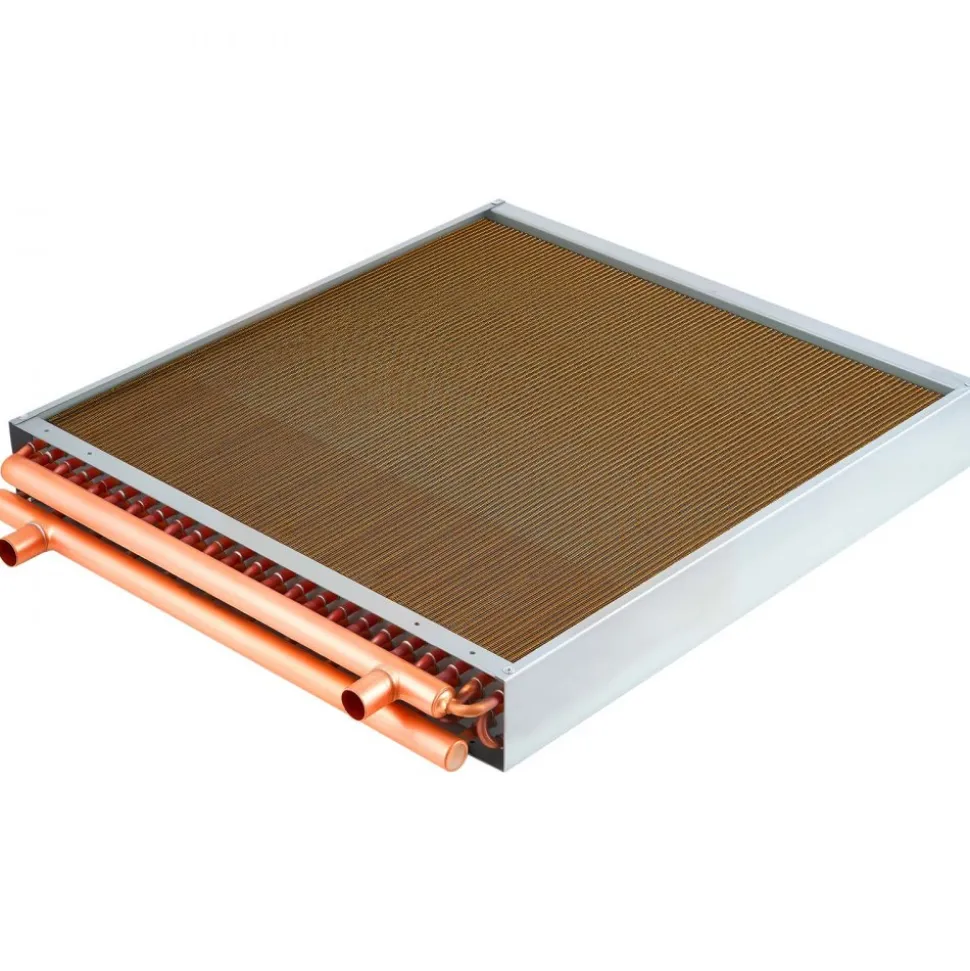
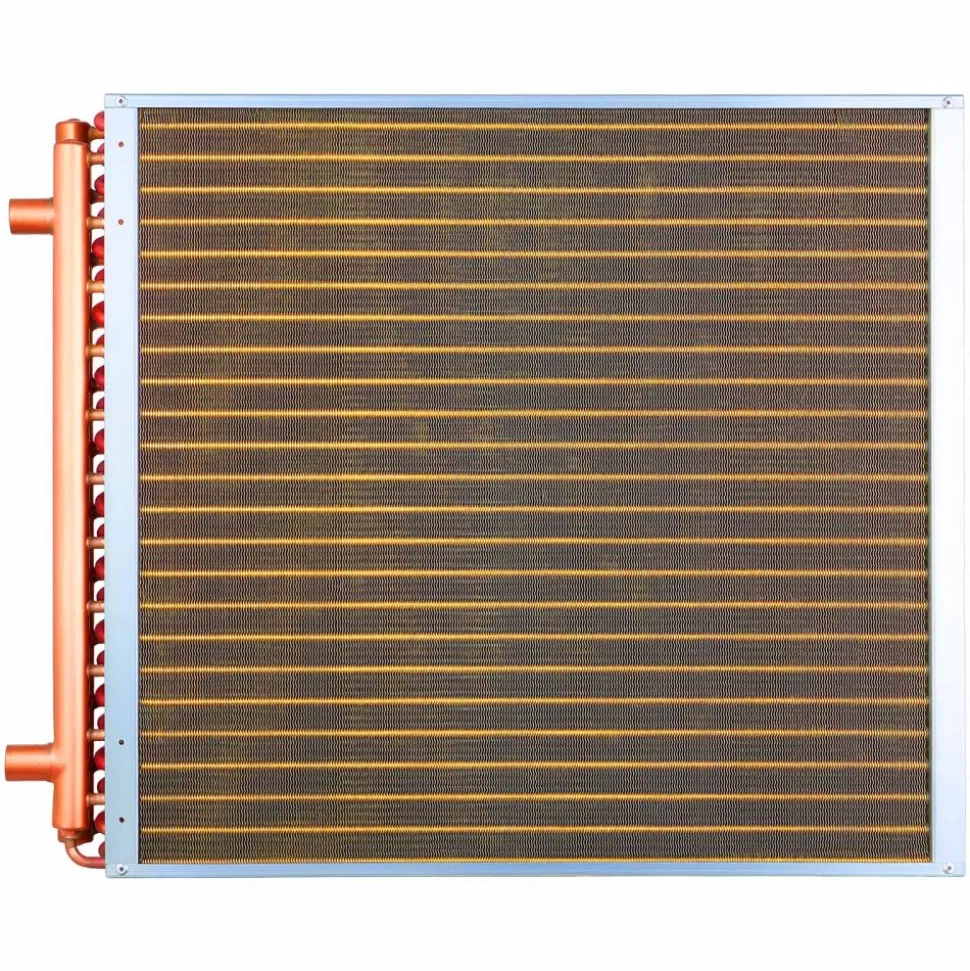
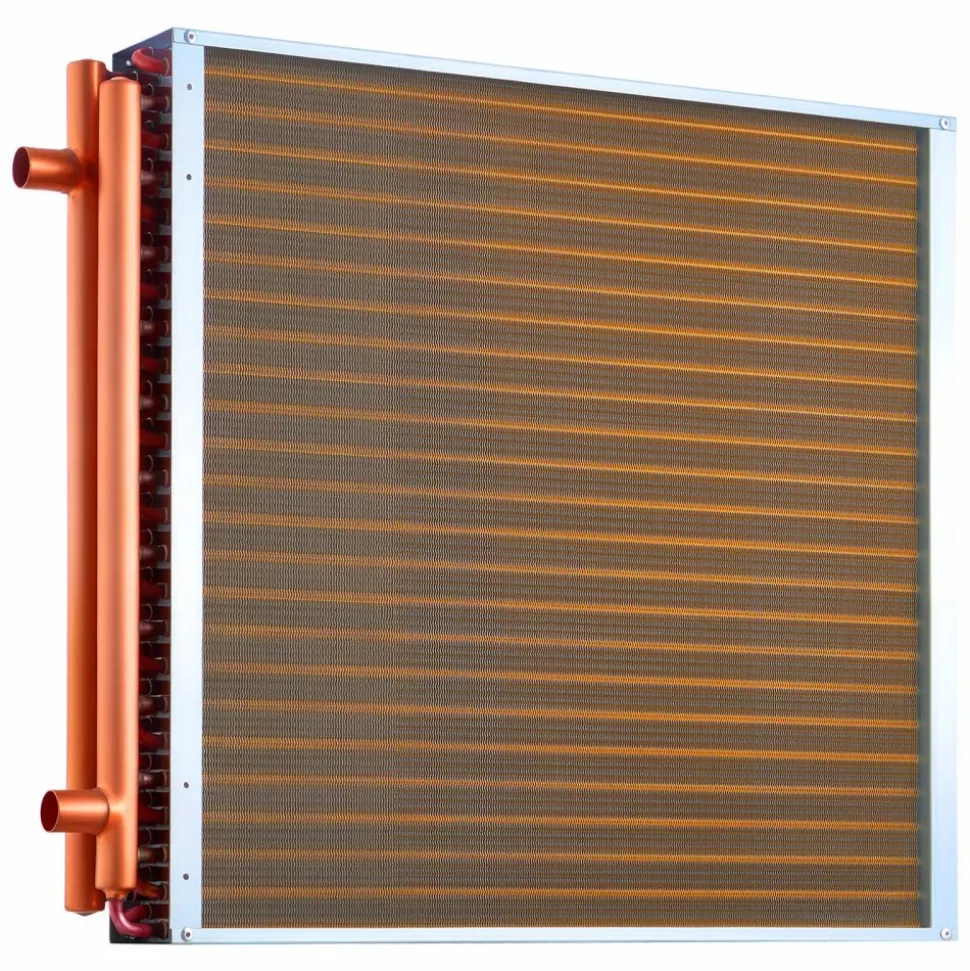
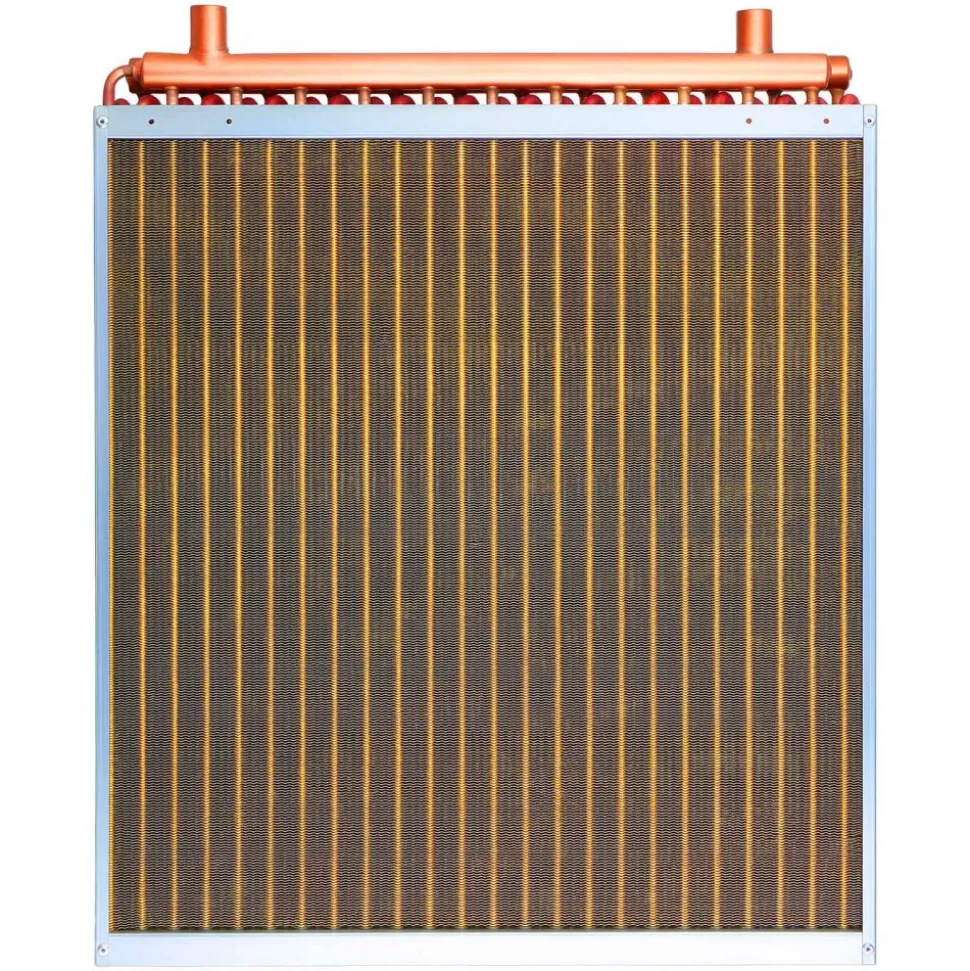
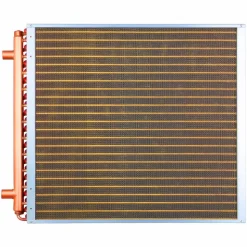
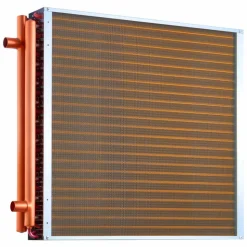
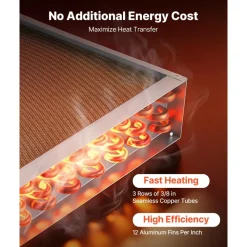
- Large Heat Transfer Area: This heat exchanger coil features a 24 x 24 in effective heat transfer area with 290 fins and 3 rows of 3/8 in seamless copper tubes, delivering outstanding performance across a wide range of applications
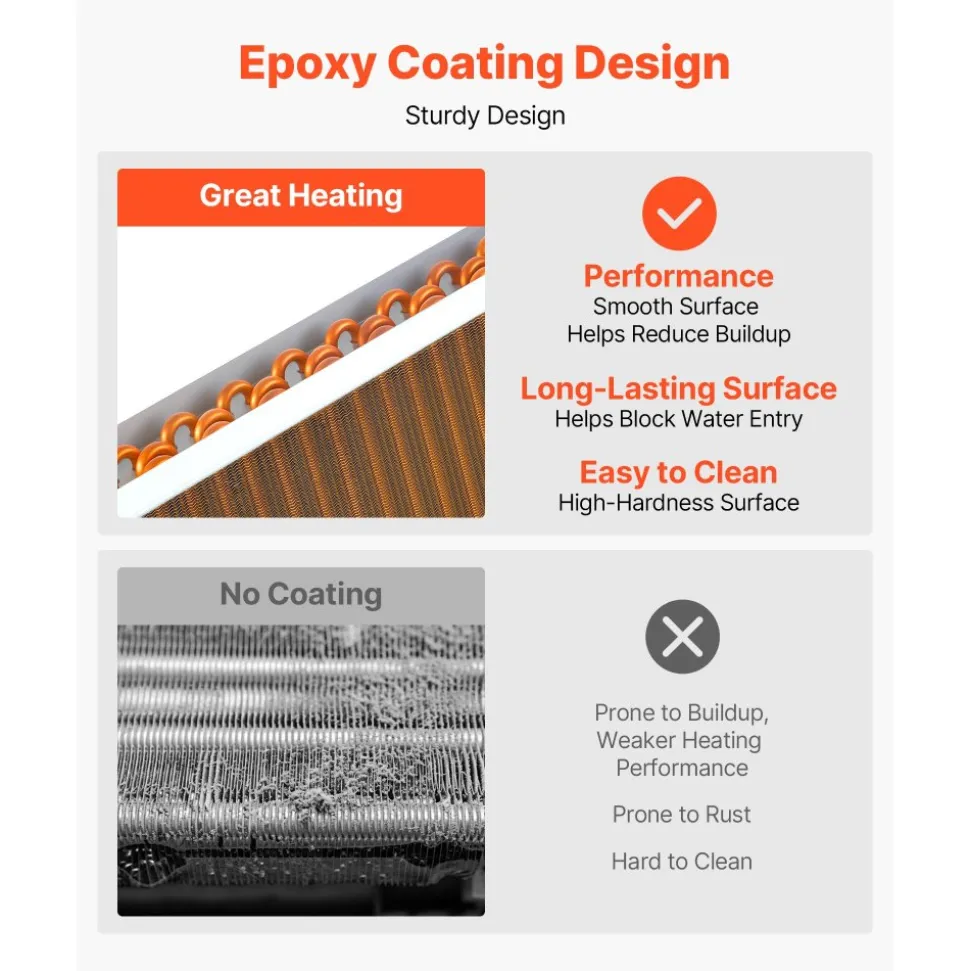
- Solid and Long-lasting: Designed as a sturdy air to water heat exchanger, high-hardness epoxy-coated aluminum fins help reduce scale buildup, paired with pure copper tubing for efficient heat transfer, with an operating temperature range of -40–356 °F
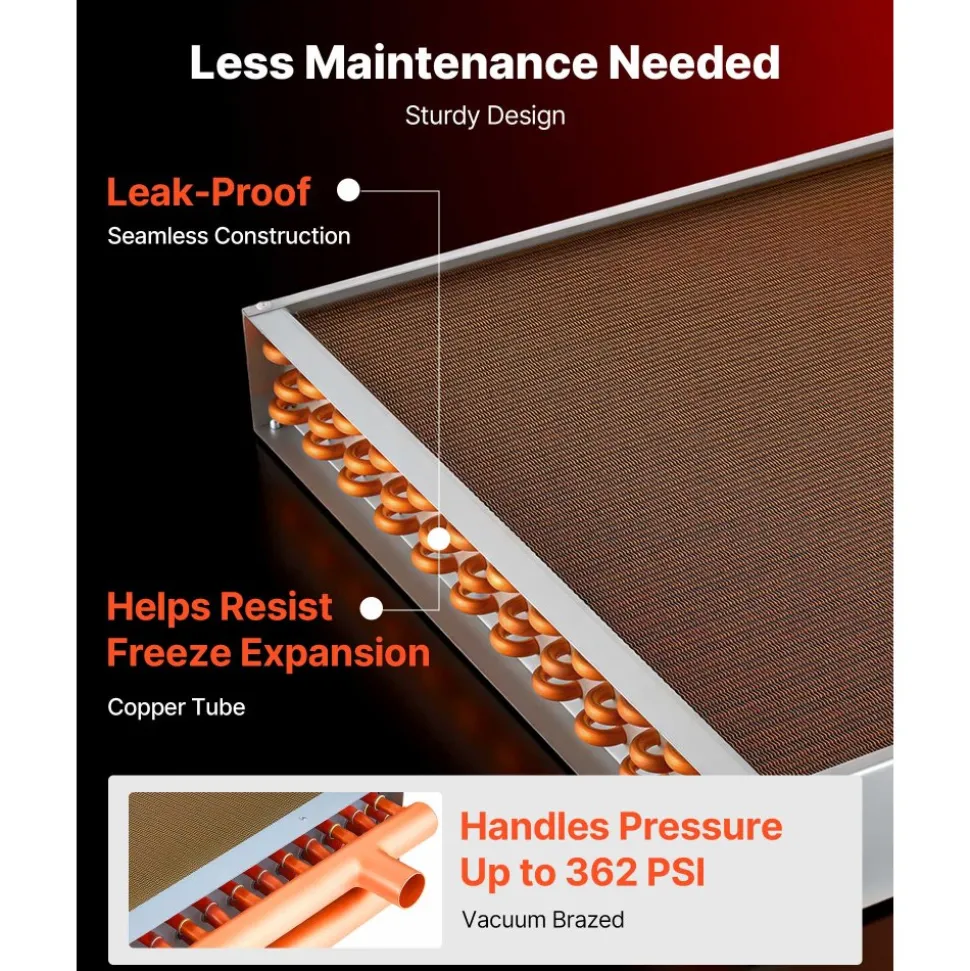
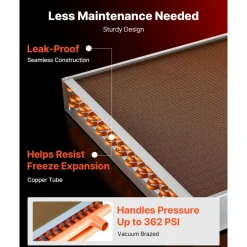
- Sealed and Leakproof: Built to perform as a reliable HVAC heat exchanger, it uses high-pressure vacuum brazing technology and undergoes rigorous leak testing for extended service life and dependable operation
- Wide Application: This water to air heat exchanger is an excellent solution for residential use, outdoor wood furnaces, large farm shops, hydroponic grow rooms, commercial heating and cooling, forced-air heating, and hybrid systems
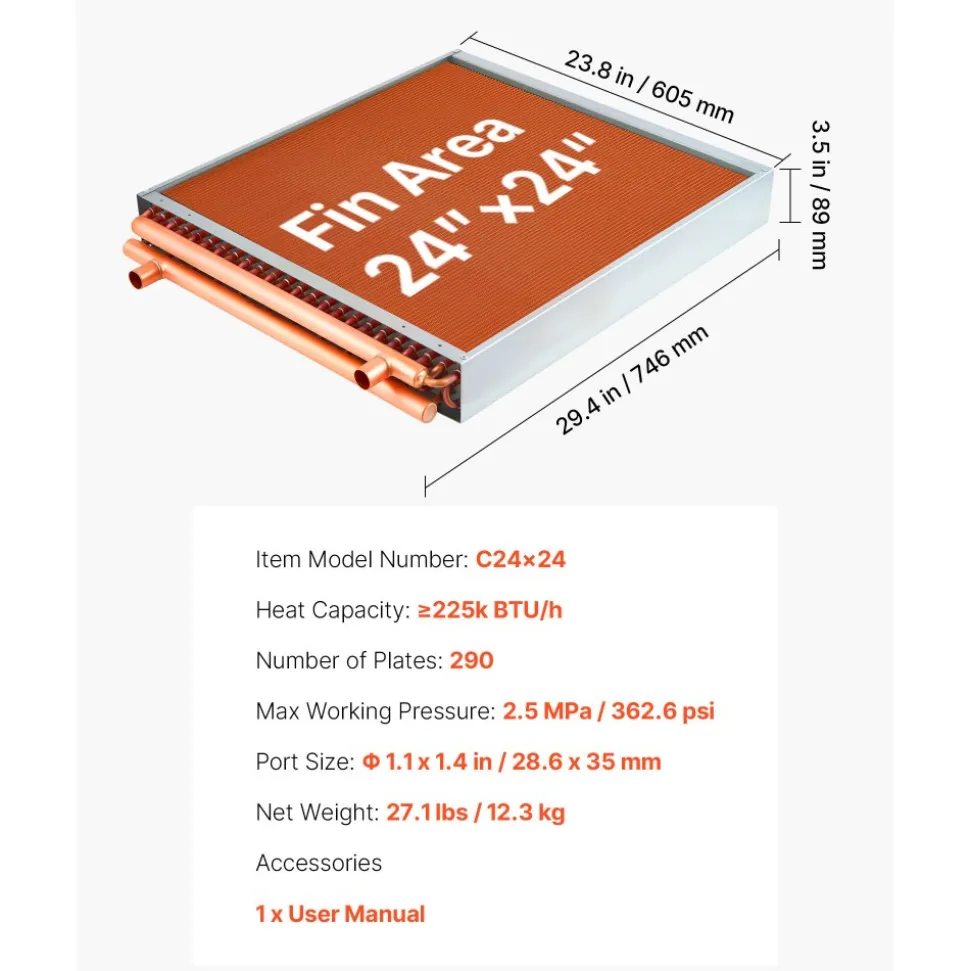
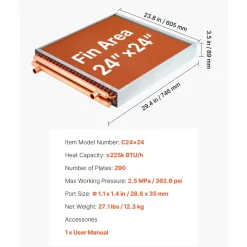
- Item Model Number
- C24×24
- Heat Capacity
- ≥225k BTU/h
- Plate Area
- 24 x 24 in / 610 x 610 mm
- Number of Fins
- 290
- Max Working Pressure
- 2.5 MPa / 362.6 psi
- Port Size
- 1.1 x 1.4 in / 28.6 x 35 mm
- Net Weight
- 27.1 lbs / 12.3 kg
- Product Dimensions
- 29.4 x 23.8 x 3.5 in / 746 x 605 x 89 mm
Water to Air Heat Exchanger Radiator with 225K BTU Output for High-Demand Heating
The VEVOR 24×24 in water to air heat exchanger radiator is rated to 225,000 BTU/h, placing it at the top of the VEVOR finned coil lineup and making it the correct choice for high-demand applications where smaller variants cannot deliver adequate output. Large farm shops, business grow rooms, multi-zone residential hydronic systems, and high-volume forced-air handlers are all examples of load conditions where this output rating provides enough thermal headroom to keep temperatures where you want them during peak demand.
The 225K BTU rating is higher than the 190K BTU 22×22 in and 120K BTU 18×18 in models in the same line. This makes it the right specification when load calculations show that middle coil sizes are insufficient to cover the system’s or space’s peak heat loss.
290 Aluminum Fins Across 24×24 in Plate Area for Maximum Airside Heat Transfer
The 24×24 in (610×610 mm) effective heat transfer area has 290 aluminum fins, the highest number in the VEVOR water-to-air coil range. This makes the contact surface between the coil and the airflow going through it as large as possible. With more fins, there is more surface area for thermal energy to transfer from the fluid moving through the coil to the air. This means that a coil with more fins will transfer more heat per unit of airflow.
This 290-fin density is very important in forced-air systems where the blower speed and duct geometry remain constant. This water to air heat exchanger radiator coil gets higher heat transfer rates at the same airflow rate than alternatives with fewer fins because it makes the most of the fin surface at the given plate dimensions.
Three-Row Seamless Copper Tube Construction for High Thermal Conductivity and Pressure Resistance
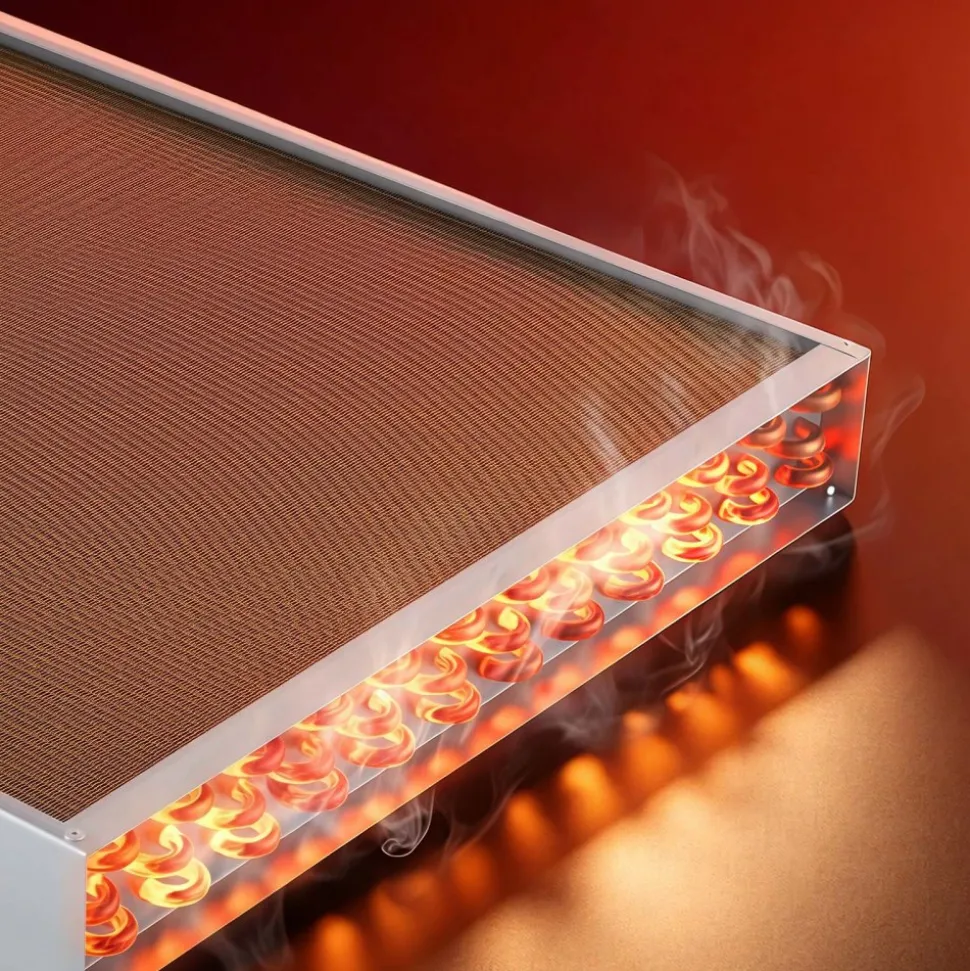
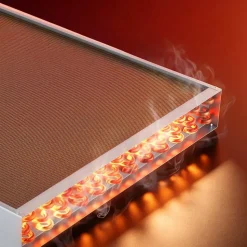
There are three rows of 3/8-inch smooth copper tubes that run through the whole stack of fins to make the coil. Copper offers excellent thermal conductivity, helping transfer heat efficiently into the aluminum fins. This keeps the entire fin surface thermally active rather than allowing the temperature to drop along the fin, which would reduce heat transfer effectiveness.
Because the tubes are seamless, there are no longitudinal welds that could fail under long-term working pressure and temperature changes. They ensure that the wall thickness and strength are uniform from the inlet to the outlet when making each tube. This way, there are no weak spots at the seams that could cause cracks when pressure in active hydronic systems fluctuates repeatedly.
High-Pressure Vacuum Brazing and Leak Testing for Long-Term Sealed Performance
Assembling each unit involves high-pressure vacuum brazing, which bonds copper tubes to aluminum fin collars through a controlled metallurgical process that keeps the joint surface free of airborne contaminants. Vacuum brazing creates completely dense, flux-free bonds across the entire joint contact area. This differs from traditional furnace brazing, where air, oxygen, and flux dust can leave gaps and weak spots at the tube-to-fin interface.
Before it is shipped, every finished coil is put through a strict leak test at the rated working pressure of 2.5 MPa (362.6 psi). This factory verification allows installers to commission the coil directly into the hydronic system without independent pressure testing or sealant treatment at the port connections before bringing the system to full operating pressure.
Water to Air Heat Exchanger Radiator with Epoxy-Coated Fins for Scale and Corrosion Resistance
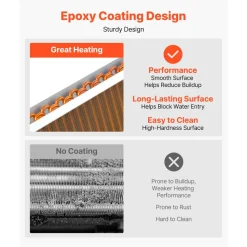
This water to air heat exchanger radiator has a high-hardness epoxy finish on the aluminum fins that helps resist corrosion and surface damage in demanding environments. In open-loop hydronic configurations connected to outdoor wood furnaces, water chemistry varies seasonally, and scale deposits can narrow fin airflow passages over time, reducing the effective heat-transfer area and degrading coil output.
The epoxy coating inhibits mineral adhesion at the fin surface and resists acidic or alkaline water chemistry without surface degradation. It also makes the edges of the fins harder, so they are less likely to be damaged during handling in ways that would bend or collapse thin aluminum fin profiles and permanently block airflow through those parts of the coil face.
Galvanized Steel Frame with 2.5 MPa Working Pressure Rating for Structural Reliability
A galvanized steel mounting frame holds up the fin-and-tube matrix while the coil unit is in use or being installed. Galvanization prevents corrosion in places like HVAC air handlers, where there is high moisture and frequent condensation. This keeps the structure intact at the frame-to-coil contact without rusting, which would weaken the mechanical support over time.
The 2.5 MPa (362.6 psi) working pressure rating supports demanding hydronic applications. This gives the coil assembly a large safety margin between normal operating pressure and its structural limit throughout its service life.
Compatible with Wood Furnaces, Hydronic Loops, Grow Rooms, and Forced-Air Systems
We can use the 24×24-inch coil in many situations where we need to move heat from water to air. Outdoor wood furnaces use it as the terminal heat emitter in a hydronic distribution loop. For precise temperature control in sealed growing spaces connected to a boiler or chiller circuit, commercial grow rooms use the same setup.
The 1.1 in. to 1.4 in. (28.6 mm to 35 mm) copper ports work with standard hydronic pipework in most residential and light-commercial settings. Weighing 27.1 lbs (12.3 kg) and measuring 29.4 × 23.8 × 3.5 in, the coil fits in standard air handler enclosures and duct plenums without special handling tools.
| Size | 14×14 inch, 18×18 inch, 22×22 inch, 24×24 inch |
|---|
Be the first to review “VEVOR Water to Air Heat Exchanger, 24 x 24 in Finned Tube HVAC Heat Exchanger Coil with Copper Tubes & Aluminum Fins, 225K BTU Output for Outdoor Wood Furnace, Hydronic Heating & Cooling Systems”
Related products
Lawn & Garden
VEVOR 15FT Generator Power Cord 50-Amp 125/250-volt 14-50P to CS6364 Locking Connector



Reviews
There are no reviews yet.